 (Image source: Gemini)
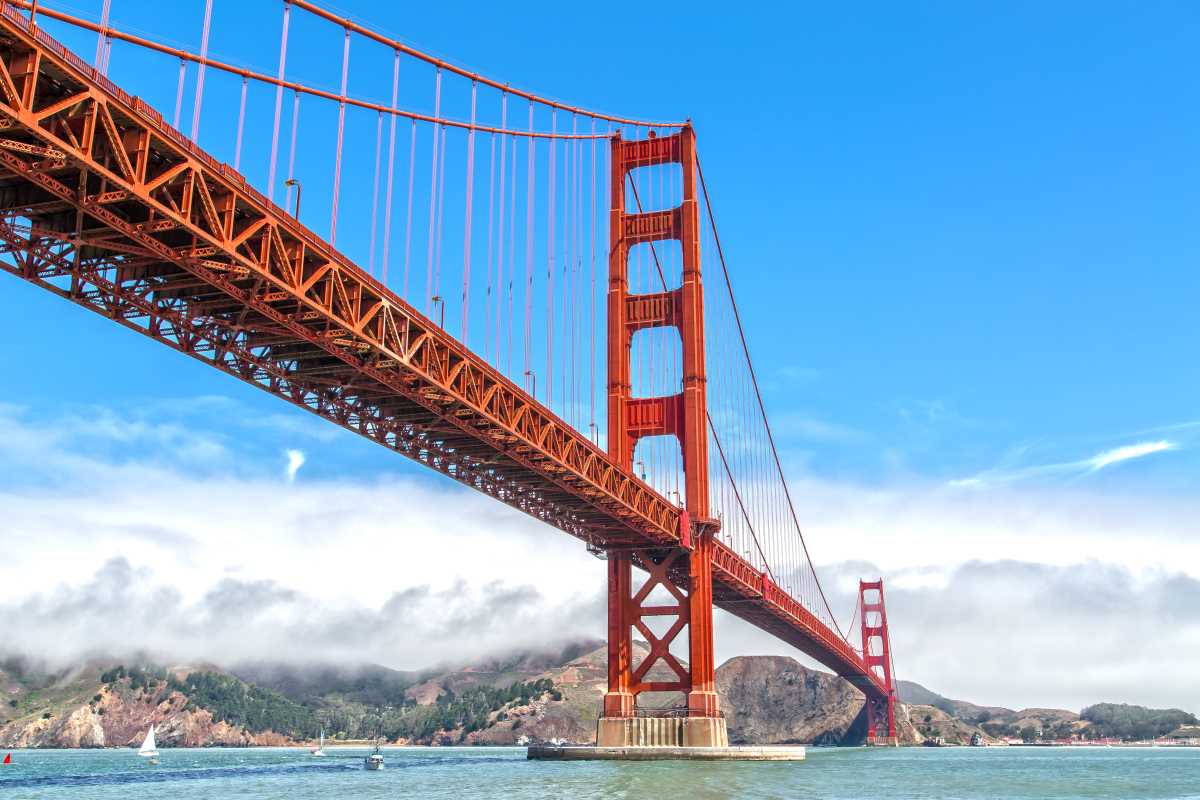
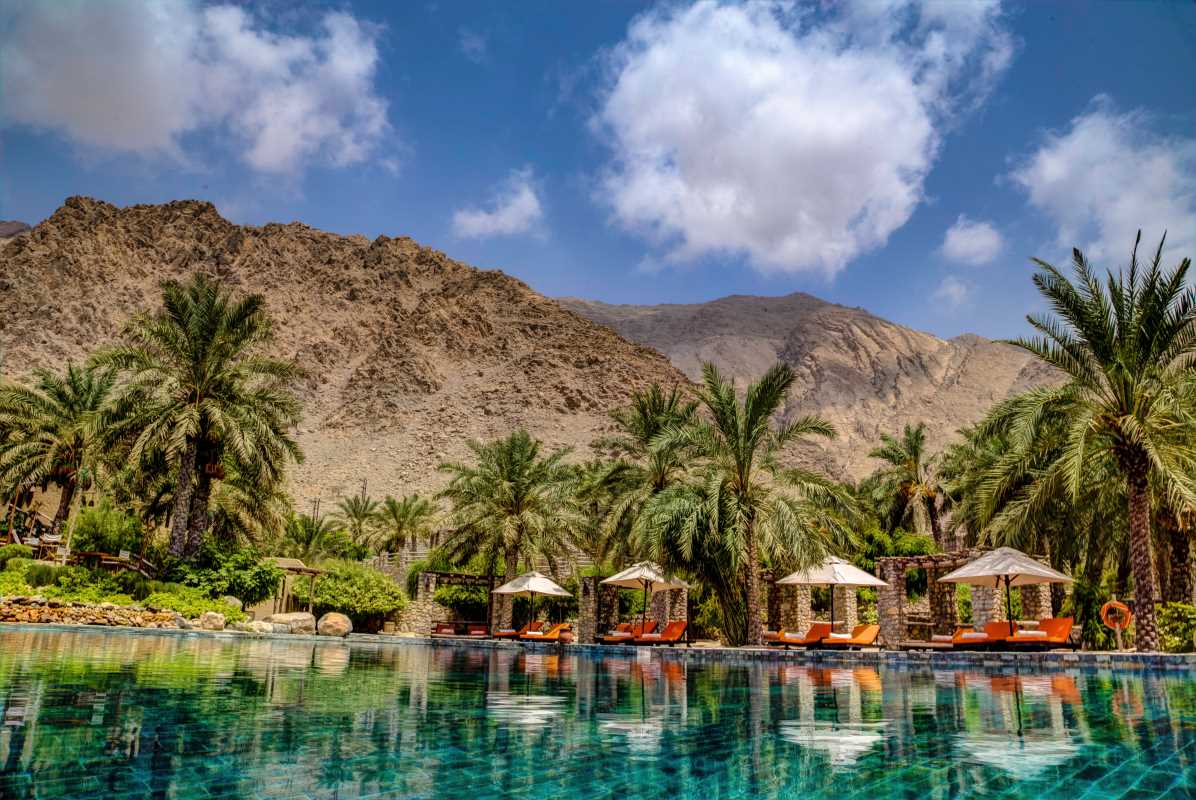
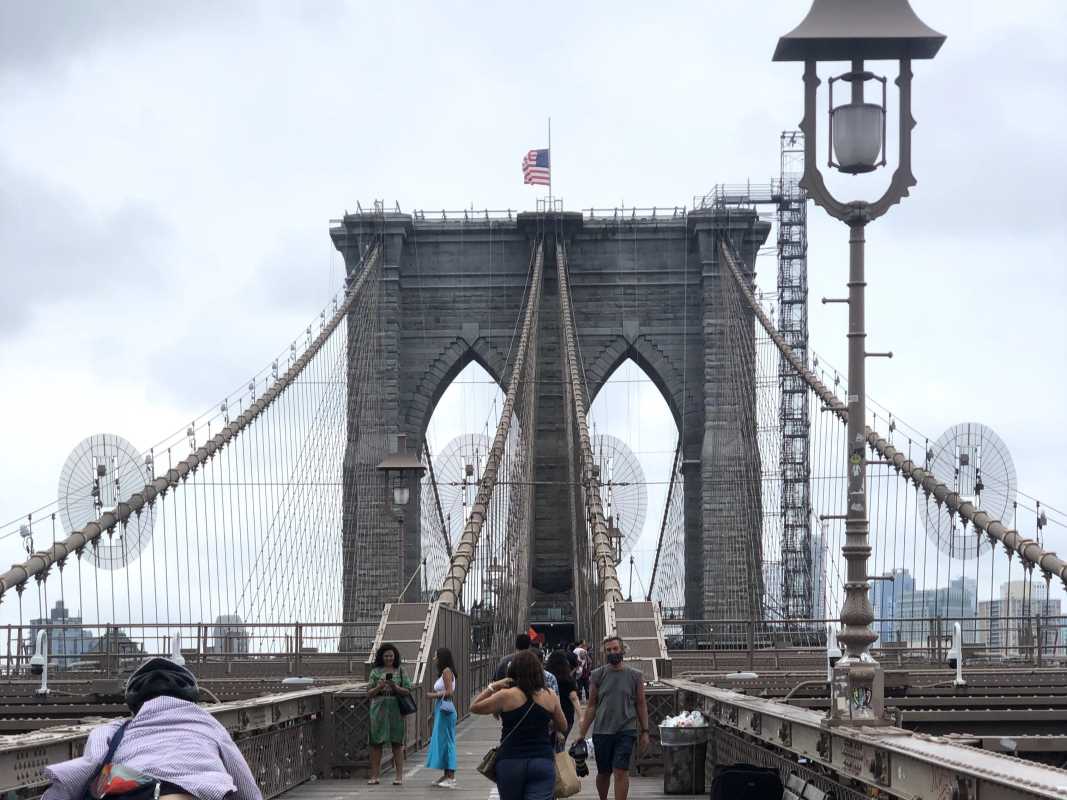
 You know that feeling when you finally arrive at a world-famous viewpoint only to find yourself staring at the back of someone’s head instead of the horizon? It’s frustrating. In 2026, the travel world is still grappling with the fallout of overtourism. We’ve seen the headlines about cities like Venice and Barcelona reaching a breaking point. It’s no wonder that 73% of us are now intentionally avoiding the big-name hotspots in favor of something quieter. So what does this actually mean for your next vacation? It means we’re moving away from the "bucket list" mentality and toward what people are calling "destination dupes." Think of it like finding a high-quality alternative to a designer brand. You get the same stunning views and fresh air, but without the souvenir stalls and the three-hour wait for a photo op.
Seeking Solitude Matters
Seeking out quiet places isn't just about avoiding a headache. It’s about the impact we have on the world. When millions of people descend on a single town, the local infrastructure crumbles. Prices go up for the people who actually live there, and fragile ecosystems get trampled. By choosing a lesser-known destination, you’re spreading the economic benefits to communities that actually want and need the support.
There’s a psychological side to this too. Have you ever noticed how much better you feel when you’re in a forest where the only sound is the wind? Science backs this up. Constant noise and crowds keep our stress levels high. True silence in nature allows your brain to actually reset. It’s the digital equivalent of clearing your cache. You come back feeling like a human being again, not just a consumer.
Choosing these paths supports regenerative travel. This is the idea that we should leave a place better than we found it. Instead of just taking a photo and leaving, you’re participating in a local economy that values its natural resources. You’re helping to prove that a standing forest or a clean beach is worth more than a new resort complex.
Hidden Spaces Where to Find Untouched Wilderness
If you’re ready to trade the crowds for some actual breathing room, there are still plenty of corners of the map that feel like a well-kept secret. You just have to know where to look.
Kyrgyzstan and the Celestial Mountains
Kyrgyzstan is a place that many people couldn’t find on a map, and that’s exactly why you should go. It’s dominated by the Tien Shan mountains, which literally translates to the "Celestial Mountains." Although the country saw over 8 million visitors in 2024, most of those travelers stick to very specific regional hubs.² This leaves the high-altitude alpine lakes and nomadic yurt camps almost entirely empty for everyone else. You can hike for days without seeing another soul, staying with local families who still live a traditional nomadic lifestyle.
The Alentejo Region in Portugal
Everyone goes to the Algarve for the beaches, but if you head just a little further north to the Alentejo, the vibe changes completely. The coastline here is rugged and wild. You’ll find massive cliffs, hidden coves, and Atlantic waves that are perfect for surfing. The best part? You can often have these beaches entirely to yourself. The inland area is just as beautiful, with rolling hills covered in cork oaks and olive groves. It’s the slow-motion version of Portugal.
Mozambique and the Uncrowded Coast
If you’ve been dreaming of the Maldives but hate the idea of a manicured resort, Mozambique is your answer. With over 1,500 miles of coastline, it’s a massive playground for ocean lovers. In 2025, the country saw about 1.27 million arrivals, which is a tiny number when you consider how much space there is.¹ You can find crystal-clear water and white sand dunes that stretch for miles. It’s also a world-class spot for diving with manta rays and whale sharks, all without the fleet of tourist boats you’d find in Thailand.
The Faroe Islands in the Off-Season
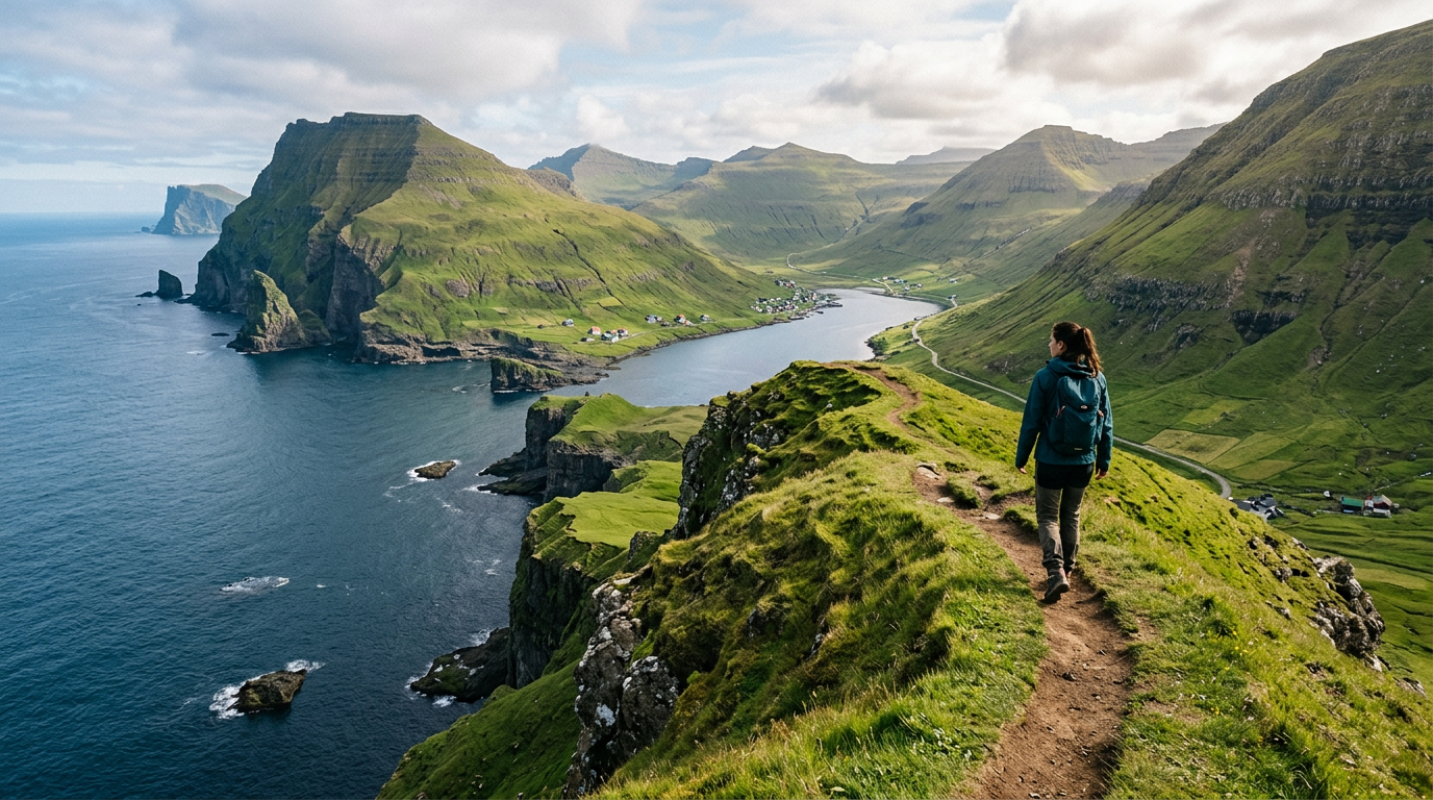
The Faroe Islands look like something out of a fantasy novel. Green cliffs drop straight into the North Atlantic, and waterfalls seem to be everywhere. Although they’ve become more popular lately, if you visit outside of the peak summer months, the islands return to their quiet, misty roots. The weather might be a bit more dramatic, but that only adds to the atmosphere. It’s the perfect place for someone who wants to feel like they’re at the edge of the world.
Practical Tips for Navigating Off-the-Beaten-Path Destinations
Going somewhere remote requires a different mindset than booking a standard city break. You can’t always rely on a 24-hour concierge or a high-speed train.
- Timing is everything. Traveling during the shoulder season (the months just before or after the peak) is the easiest way to cut your crowd exposure by half. You’ll also save a lot of money on flights and accommodation.
- Research local operators. Look for tour guides who live in the area and focus on small groups. They’ll take you to spots that aren't on the standard maps and make sure your money stays in the local community.
- Gear up for limited infrastructure. When you’re in places like the North Cascades or the steppes of Central Asia, you need to be self-sufficient. This means having a reliable GPS, a good first-aid kit, and high-quality weather protection. Don't expect cell service to save you if you get lost.
- Check the voucher systems. Some places, like Bonito in Brazil, use a digital voucher system to strictly control how many people can visit their rivers and caves. You have to book these well in advance, but it make sures the experience remains pristine for everyone.
Leave No Trace in Pristine Places
The irony of finding a "hidden" spot is that by being there, you’re part of the reason it might not stay hidden for long. This is why being a respectful traveler is non-negotiable. According to travel expert Ignacio Maza, about 80% of global travelers are concentrated in just 10% of destinations. When we step into that other 90%, we have a responsibility to keep it as we found it.
The Leave No Trace principles are your best friend here. It’s not just about picking up your trash. It’s about staying on the trails so you don’t crush rare plants and keeping a respectful distance from wildlife. In places like Bhutan, which is the world’s only carbon-negative country, these values are built into the local culture. We should aim to match that level of care.
Social media is another big factor. When you find a perfect, untouched waterfall, the urge to post it with a geo-tag is strong. But think twice. Digital geo-tagging has turned many quiet spots into overcrowded nightmares overnight. Consider sharing the photo but leaving the specific coordinates out of it. Let other people have the joy of discovering it for themselves.
Your Guide to Aware Travel
We’ve been conditioned to think that a successful trip is one where we see all the big sights and take all the right photos. But what if we changed the goal? Instead of a checklist, aim for immersion.
Try staying in one place for a week instead of hopping between three different cities. Walk the same neighborhood streets every morning. Eat at the same small cafe until the owner recognizes you. This kind of travel allows you to actually understand the rhythm of a place. You aren't just a spectator; you’re a temporary part of the community.
Curating an itinerary that prioritizes nature and silence might feel strange at first. You might worry that you’re "missing out" on the famous landmarks. But the truth is, you’re trading a generic experience for a unique one. Ten years from now, you won't remember the crowd at the Eiffel Tower, but you’ll definitely remember the night you spent under the dark skies of the Yukon or the sound of the wind in the North Cascades.
The beauty of the unknown is waiting for you. It’s out there in the high mountains, the quiet coastal paths, and the deep forests. All you have to do is be willing to step away from the crowd and see what happens.